A balloon kit is perishable - specify it that way
A balloon garland reads as a durable prop and behaves like a perishable good. Latex loses lift in a day, oxidises in light and carries a shelf life, so the specification is a sell-by decision.
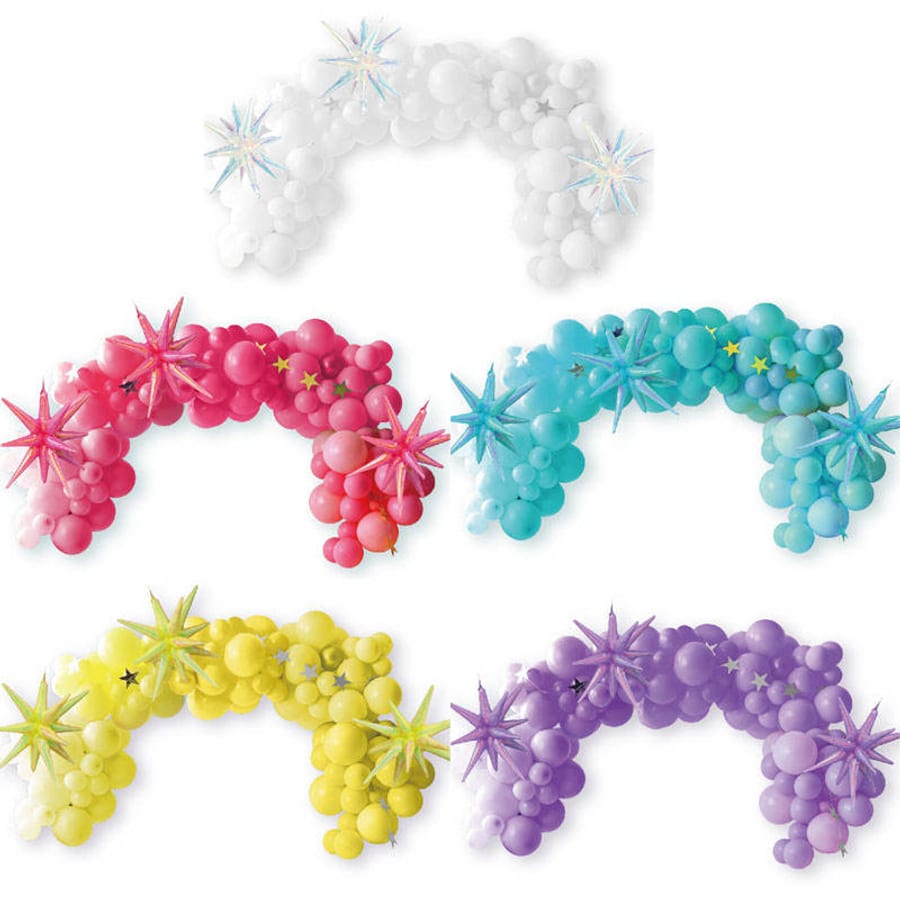
A balloon garland is bought like a prop and it behaves like a perishable good. It carries a lift expectation, a shelf life, and a finish that changes once air touches it. Buyers who treat the kit as a durable decoration tend to discover all three at once, in front of a customer.
The promise you are actually selling is lift
Latex balloons lose their lift quickly. Helium molecules are small enough to diffuse straight through the wall of the balloon, so latex filled for an event is a same-day product rather than a same-week one. Foil balloons are made from a non-porous material and hold their lift far longer.
That difference decides what a kit can honestly be sold as. A garland that hangs indoors for an afternoon is a straightforward proposition. The same garland sold as a week-long display is not, and the complaint arrives after the customer has already hung it.
Latex has a date on it
Latex is harvested from rubber trees, which is why the material ages. Uninflated stock has a shelf life, and storage decides how much of it survives to the day it is used: away from direct sunlight and fluorescent light, away from heat, and at a steady room temperature of roughly 20 to 22 degrees C.
Inflation starts a second clock. Once a balloon is filled it begins to oxidise, and the visible result is a finish that goes from glossy to cloudy. Ultraviolet light accelerates that and also makes the film more brittle. A garland that looked right in a photograph can still read as tired by its second day.
What is actually inside the kit
A garland kit is a size mix plus hardware, and the mix is where two kits at the same piece count diverge:
- Balloon sizes, usually a small and a large working together, such as 5 inch with 11 or 12 inch
- The colour and finish count, because matte, pearl and confetti finishes do not read the same
- The garland strip, a plastic tape with holes that the balloon necks are pushed through
- Adhesive dots, ribbon, and any foil or confetti accents
The strip is the quiet failure point. A short strip, or one whose holes tear when a balloon is pulled through, ends the kit's life before the balloons do.
What to settle before you commit
- The lift expectation, in writing. Same-day indoor use and multi-day display are different products with different balloons in them.
- The size and finish mix by count, not by total pieces, so a reorder matches the first run.
- The strip by length and hole count, and whether it survives a whole garland being assembled.
- Light-blocking packaging, with storage guidance printed on it, because the shelf life belongs with whoever stores the stock.
- One inflation test. Fill a sample and leave it standing for two days. That answers more than a photograph does.
None of this is exotic. It is the difference between a kit that sells as a decoration and one that comes back as a complaint. The party range shows how the components are specified across a full programme.
Written from recurring community discussion themes — Party businesses comparing how long latex and foil balloons actually hold their lift (topic cue only) · Decorators describing latex balloons going dull and cloudy after inflating them early (topic cue only) · Distributor guidance on storing latex balloons away from light and heat, and the shelf life that follows (topic cue only). Topic cues only; every word here is original.
Need pricing for these styles?
Send quantities, sizes and your destination market — we reply with price, lead time and sample options.